Showing posts with label Robin Rogers. Show all posts

Monday, November 12, 2012

Crisis in Academic Governance & Standards at CUNY

The following is a guest posting by Robin Rogers, associate professor of sociology at Queens College and the Graduate Center at the City University of New York (CUNY). Robin authored the popular "Billionaire Education Policy." She can be reached via email at robinrogers99@gmail.com
Follow her on Twitter: @Robin_Rogers
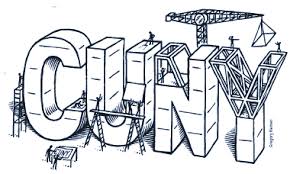


The City University of New York (CUNY) is in the middle of a clash over budget-driven higher education reform that could rival the Chicago Public School strike, and that is bad for everyone. The epicenter of the crisis right now is in the small, unassuming English department of Queensborough Community College (QCC). 

At issue is CUNY’s implementation of a new program known as Pathwaysthat aims to make transferring among CUNY colleges, particularly from the community colleges to the senior colleges, easier and to improve graduation rates. It is also an attempt to make the CUNY system more cost-effective. All of this seems very rational. In fact, when I first heard about Pathways, I thought it might work. What is happening now, however, is tearing CUNY apart and threatens to diminish the noble CUNY system, with its unmatched diversity, which has been a center of both academic excellence and accessibility for decades.

Before getting into the decidedly local, and very shocking, details of what is happening at CUNY, and which reached a boiling point last week at QCC, I want to make it clear that CUNY is not a unique case. Similar dynamics are at work throughout higher education and, thankfully, some universities are handling it with  grace and wisdom. (For an example see, THIS is What Shared Governance Looks Like! ) That bodes well not only for those universities but also for the future of the institution of higher education.

As with all major events, the CUNY Pathways crisis has a long history and many facets. I’ll start with the event that was significant enough to merit coverage in the New York Times on September 17th. Here is what happened.

On September 12th, 2012 Interim Vice President of Academic Affairs at Queensborough College, Karen Steelecame to the English Department’s faculty meeting to discuss a proposed change to the department’s composition courses that would make it a 3-hour course rather than a 4-hour course and thus compliant with the new CUNY Pathways rule. According to a faculty member present, “She also brought a host of threats, including some of the ones that she later put into writing in her infamous emailwhich essentially threatened to dissolve our entire department.  It was clear that she expected our department to roll over and vote to pass the new courses – if you can call something a vote when only one outcome is acceptable and the other outcome results in the termination of your employment.
Professor David Humphries, then the Deputy Chair of the English Department was quoted in the Times as saying “It’s hard to understand how teaching less English, less math, less science and less foreign languages could be good for students,” Echoing concerns expressed by many other faculty across CUNY campuses, including myself, Humphries continued, “Under the guise of streamlining transferability we’re actually watering down the students’ education.
It gets worse. Much worse.
The English department voted against dropping the fourth hour of instruction on the grounds that it was academically unsound; their students needed more time. Then they elected David Humphries as Chairman of the English Department by an almost 3/4th majority faculty vote.
On November 6th, Election Day -- one hopes this simply reflects President Call’s finely honed sense of irony -- Queensborough College President Diane Call rejected the vote for Humphries. Instead, she replaced the faculty-elected Humphries with her own self appointed interim chair (who was brought out of retirement to take on the task) and announced that she would be conducting a national search for a new department chair. The interim chair would take over administrative tasks, while Vice-President Karen Steele – yes, you do remember that name – would assume tasks such as bringing faculty members up for promotion and tenure.
The English Department issued an open letter demanding that President Call reverse her decision and respect faculty autonomy in departmental governance. A petition is also being circulated, which you can sign and circulate online.
The events at QCC are only a part of what is happening at CUNY.  Now there is a lawsuit against Pathways by the faculty union. There very well may be another lawsuit over Call’s recall of a department chair, which appears to violate the bylaws of the faculty that requires that a petition to the Faculty Executive Committee be signed by a majority of the full-time faculty members of the department. Last week, Staten Island College faculty voted to reject Pathways. Other colleges and departments are taking similar action. Foreign languages, classics, and philosophy – the core of the traditional humanities – are extremely limited under Pathways. And so much more.
This promises to be an interesting and important week for higher education and for CUNY. If you want to follow what is happening on twitter, you can follow #CUNYPathways.
Full disclosure: I worked with Professor Humphries almost ten years ago when he was at Queens College, and I have the highest regard for him.
*******

Update: 11/13/11

The following email was sent to members of the Queensborough Community College English Department late this morning:

Colleagues—
It is my decision to accept the recommendation forwarded by the English Department for Dr. David Humphries to serve as its Chairperson, effective November 14, 2012.
In a lengthy meeting with Dr. Humphries yesterday, he expressed his willingness and ability to advance the important work of the English Department in curricular and personnel matters. I have confidence in and appreciate his sincerity to unite the department as a community, in the best interests of the College and our students.

Thank you.
Dr. Diane B. Call
Interim President
Queensborough Community College


Thursday, September 13, 2012

Guest Blog: Billionaire Philanthropy and the Chicago Teachers' Strike

The following is a guest posting by Robin Rogers, associate professor of sociology at Queens College and the Graduate Center at the City University of New York (CUNY). Robin's last post was the popular "Billionaire Education Policy." She can be reached via email at robinrogers99@gmail.com
Follow her on Twitter: @Robin_Rogers


Earlier this week I was a guest panelist for Al Jazeera English’s news program Inside Story. The half-hour feature – provocatively entitled “Should U.S. schools be run like businesses?” – focused on the Chicago teachers’ strike that had begun that morning. The two other guests were Joanne Barkan, who writes on economic, labor and education issues, and her clear foil Matthew Chingos, a fellow at the Brown Center on Education Policy at the Brookings Institution in Washington, D.C. – and, I should note, currently in a heated debate with Sara Goldrick-Rab.

Barkan and Chingos are formidable thinkers and articulate advocates for their positions on the Chicago strike, Barkan siding with the Chicago Teachers Union and Chingos making a case against it. And then there was me. I’d be delighted to say I was brought onto this panel as the rational moderate—or as I prefer to think of it, immoderately rational. But rather, I was brought on as “an expert on the role of billionaire philanthropy in shaping public policy.” Taking a step back, it’s important to ask why a panel on the teachers’ strike needs an expert on billionaire philanthropy. My very presence at the table is telling. The truth is, you can’t understand what’s happening in Chicago without factoring billionaire philanthropists like Bill Gates, Eli Broad, Michael Dell, and Michael Bloomberg into the equation.

To be clear, billionaire-financed education reform is not the only reason for this strike. The city of Chicago is facing debt in the billions. The schools are under-performing and among the most segregated in the country. Mayor Rahm Emanuel and his education reformers have genuine problems to solve and good points to make. On the other hand, Chicago teachers are facing a serious and well-financed effort to cut their pay and benefits while the school system is reorganized to permit their wholesale firing. They have some good points, too.

The strike, however, is about much more than these bread and butter issues. The strike is about the heart and soul of American public education. I don’t buy the claims being tossed around by both sides that this is all about the kids. (It is never all about the kids: they don’t vote.) This particular strike, in many ways, has become a referendum on how “public” public schools should be. Increasingly, public officials like Rahm Emanuel are teaming up with private education reformers and private foundations. The question of who controls public education – an institution that is at the core of democracy – has become open-ended.

One of the biggest issues in the Chicago strike is teacher evaluation. For many observers, this issue makes teachers seem unsympathetic, as if they’re afraid of being evaluated. But evaluation in and of itself isn’t the real issue—even many unions support strong evaluation and reform. In today’s debate, teacher evaluation has become something of a code word or a Trojan horse for a package of other reforms, many of which lead toward the privatization and de-professionalization of teaching. On the surface, it might seem trite or suspicious for teachers to be striking over their evaluations, or their pensions and healthcare. In truth, for both sides the strike is about much more than that.

When anti-union reform advocates talk about teacher evaluations, they’re also talking about a new type of education system—the type supported by billionaire philanthropists— that rewrites the rules of seniority, tenure and credentialing, while shifting funding priorities into public charter schools and other new models. Pro-union opponents, on the other hand, support some types of evaluation and reform, but they also want to strengthen and preserve what we currently understand to be the public education system.

The aspect of this debate that’s very frustrating to me as a social scientist is the idea that we can look to scientific studies for “objective” answers as to “what works” in education. Today’s education reformists often believe that they have found the “solution” to public education. Based on what is presented as clear-cut research, reformists will shut down longstanding neighborhood schools and open charter schools that reflect the latest, trendiest “solution.”

Meanwhile, most education researchers will tell you that we wish we could handpick the perfect teacher based on the perfect parameters or evaluation schema, but we can’t. Teacher evaluation models have turned out to be very iffy predictors of how well a teacher performs – and, of course, there is not an endless supply of brilliant teachers. This doesn’t mean there aren’t solutions or strategies for hiring good teachers, but rather that public education is more complicated than many number-crunching reformers realize.

There is mounting evidence that charter schools don’t perform particularly better or worse than regular public schools, despite the money invested in charters. Of course there are examples of outstanding charter schools just as there are examples of outstanding public schools. I went to Stuyvesant High School in New York City, an outstanding public school, and yet I don’t think it’s reasonable to suggest that Stuyvesant could be duplicated all over the country – “scaled up” to use the language of philanthrocapitalist education reformers.

There are three important points that I want to make away from the heated rhetoric on both sides of the strike – point that I think many involved would agree with but that are being lost in the fray. First, we are at a turning point in American education that will impact our ability to sustain our democratic system as well as our economic competitiveness. Second, education research is being mangled and abused as people – again on both sides – try to turn questions that are fundamentally about our values and priorities into technical questions that can be solved with a spreadsheet or regression analysis. Third, billionaire philanthropists have an outsized role in public education policy that is financed by tax dollars as well as private contributions. If we can focus on these three issues and use education research in good faith, then perhaps we can build a public education system worthy of our county’s children – even if they don’t vote.

Monday, December 5, 2011

Billionaire Education Policy (Guest Post)


The following is a guest posting by my colleague and friend Robin Rogers, associate professor of sociology at Queens College and the Graduate Center at the City University of New York (CUNY). She is the author of “Why Philanthro-policymaking Matters” in The Politics of Philanthrocapitalism, Society 2011, The Welfare Experiments: Politics and Policy Evaluation (Stanford University Press, 2004) and numerous articles on politics and social policy. Rogers served as a Congressional Fellow on Women and Public Policy during welfare reform, as a Robert Wood Johnson Health Policy Scholar at Yale University, was a visiting fellow at Princeton University. She is writing a book on philanthro-policymaking, Billionaire Philanthropy. This is the first of two posts in a mini-series on the Education Optimists.

The word “policy” makes us think of politicians and bureaucrats. But what happens when powerful policy-makers aren’t elected or appointed? Today, billionaires are shaping education policy in the United States. Buying political influence—-even legally—-feels dirty, so let me try again:

Philanthropists are saving our schools!

See what happened when I replaced “political influence” with “philanthropy”?

The super wealthy—I’m talking about the .01, not the measly 1%—have more influence in American politics than the 99% because they can donate huge sums of money to political campaigns and fund Congressional lobbyists. But their power extends beyond these well-publicized campaign contributions. With the economic crisis, the government is broken and broke, leaving a vacuum for the very rich to become more directly involved with the formation and implementation of social policy.

For years, the connection between philanthropy and policy-making has flown under the radar, but last week, the New York Times published “Policy-Making Billionaires” by political reporter Nicholas Confessore. I’m surprised it took so long for an article on billionaire policymaking to hit the newsstands. The Occupy Movement focused public attention on inequality and the concentration of wealth and power, yet we rarely talk about elite, strategic philanthropy, which Mathew Bishop calls philanthro-capitalism and Chrystia Freeland calls plutocracy. Michael Edwards has argued that philanthro-capitalism erodes civil society. I have written about the rise of philanthro-policymaking. But still, the rise of co-ordinated and strategic philanthropy by the very wealthy hasn’t been covered by the media.

Very, very wealthy men—-Diane Ravitch calls them the Billionaires Boys Club-- are setting policy. Ravitch’s “Boys Club” moniker has a literal counterpart in the form of the mysterious "The Good Club," a small group of billionaires led by Warren Buffett and Bill Gates that meets with the specific intention of setting the global social agenda. To be fair, it is not only a boys club; reportedly, Oprah is a member, so it’s The Billionaire Boys Club and Oprah.

Education policy is where mega-philanthropists are making the most significant inroads in the United States. In New York, billionaire Mayor Michael Bloomberg and billionaire philanthropist George Soros put up $30 million each for the Young Men’s Initiative, and then the City of New York matched these contributions. The goal of the Young Men’s Initiative is to improve the health, education, and employment of young black and Latino men in New York so they don’t end up in prison. No argument here: that’s a great goal. But $60 million in matching funds? Is this just extra cash the city had on hand? No. It came at the exclusion of other policy priorities. Is the Young Men’s Initiative a better use of taxpayer dollars than other programs would have been? Maybe. Did the philanthropic agenda of Bloomberg and Soros set social policy in New York? Absolutely.

There is no sign of this trend slowing down. In Screw Business as Usual, Virgin Atlantic founder Richard Branson argues for more elite policy-making power – you guessed it, in the form of “doing good.”

Yesterday, Twitter was buzzing with the news that the Gates Foundation had given a grant to ALEC to, essentially, influence state budget making -- where the rubber hits the road in education policy. I heard some debate over whether this constituted a Republican takeover of the state budget process, a Gates Foundation takeover of ALEC or both. No one suggested it was a victory for democracy. Kristen McQueary recently wrote about the scandal erupting over Stand for Children’s founder Jonah Edelman’s rant last summer in Aspen. Edelman was pretty explicit about the group’s power in the legislative process. Shhhh, Jonah! To paraphrase the movie Fight Club, the first rule of philanthropolicymaking is never speak of philanthropolicymaking.

One troubling example hits at the heart of public education. Last year, Facebook CEO Mark Zuckerberg appeared on Oprah to give the city of Newark, NJ 100 million dollars. Governor Chris Christie and Mayor Cory Booker were there, too. Big photo op – and nice photo. Then it got messy. Zuckerberg formed a foundation, Startup: Education, intended to parcel out grants to schools that matched funds with the grant and fit the foundation’s priorities. Months after the Oprah announcement, the ACLU filed a lawsuit against the city of Newark for denying access to communications between Booker and Zuckerberg. Booker claimed that communications between him and Zuckerberg regarding the grant were personal; that he wasn’t acting as Mayor, and thus the information was private. Zuckerberg later said the money was actually for developing leaders, like Booker. Now, according to New Jersey officials, the plan is to use the money to “experiment” with education policy and find “what works” and then replicate the best programs with public money.

The idea of using policy experiments to learn what works sounds great, but the reality is more complicated. In The Welfare Experiments: Politics and Policy Evaluation, I showed that policy experiments led to the 1996 welfare reform by changing institutional structures, building networks of people in support of reform, and making the idea of time limited welfare publicly acceptable. It had nothing to do with the research findings on the programs. The role of experimental programs in education reform is complicated – and the focus of Billionaire Education Policy, Part 2 (the next installment of this post, coming next Monday on the Education Optimists). For now, I’ll say that I am skeptical of claims, such as the one Confessore suggests, that “Whatever proves most effective [in the experiments] can then be rolled out on a larger scale…” Policy experiments don’t work that way.

All over the country, variations of the New York and New Jersey story are playing out: Philanthropists give money to resource-starved school systems, and in return, they reserve the right to effectively set education policy. Consultants and for profit programs present a potential conflict of interest by creating cash cows. Booker‘s claim that he was acting as a private citizen—and the fact that Zuckerberg’s money was just a pledge, not a guarantee of funding—raises questions. What is private and what is public? Is anyone accountable for what happens to this money? Do we need more transparency for private donations?

I feel crass in suggesting that we probe philanthropic giving with the same critical eye we cast on political money and business profits. And yet, the very nature of philanthropic giving has significantly changed in recent years. A handful of wealthy individuals and families control a large amount of this country’s wealth, and their “philanthropy” is beginning to feel more like governance.

ROBIN ROGERS can be reached via email at robinrogers99@gmail.com
Follow her on Twitter: @Robin_Rogers
Posting Lama ►
 

Followers

Alexa

Copyright 2013 Education for Everyone: Robin Rogers Template by CB Blogger Template. Powered by Blogger