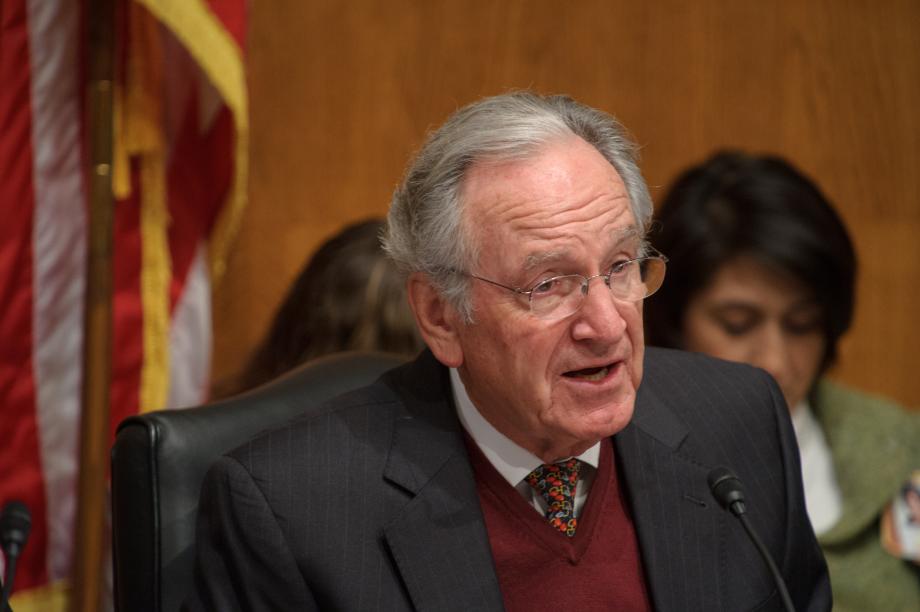
This morning, I testified before the United State's Senate HELP committee on the topic of college affordability. My written testimony can be found here. The text of my oral testimony follows, and I have added a q&a to respond to several questions I expect to receive. I welcome your feedback.

Good morning, Chairman Harkin, Senator Alexander, and Members of the Committee. Thank you all for this opportunity.
There’s never been a more important time to address the issue of college affordability. College is now the main road to a stable, secure life, and in this age of global knowledge markets, it is college-educated workers who will be the main driver of the U.S.’s prosperity. But the research evidence is clear: most families and students find the high cost of college attendance unbearable, and it’s affecting their choices about whether to attend college, where to go, and even whether or not to finish the degrees and certificates they start. As access to college becomes more difficult, public frustration is emerging and is spilling over towards other institutions and indeed into the streets.
Today Americans are experiencing annual declines in family income, yet net price of attending public colleges and universities continues to rise by almost $500 per year—that’s after taking aid into account. In the early 1970s, the maximum Pell Grant covered almost 80% of the costs of attending a public 4-year institution--today it covers barely 30%. With so little help, even low-income families are left with a bill of about $12,000 a year. For many, that’s the equivalent of up to 70% of their annual income. And so unsurprisingly, only about 1 in 10 find their way a college degree.
It hasn’t always been this way. The idea that students should bear most of the costs of college comes from a time when college cost much less and powerful people thought markets were saviors. Students today are just as responsible as ever, and just as willing to work for their education, but their task is plainly impossible. Covering that $12,000 in unmet need requires a student to work at least 35 hours a week, 52 weeks a year at the federal minimum wage. That arrangement is untenable, and moreover compromises their chances of completing their degrees.
Congress got it right in 1972 when it affirmed the societal goal of universal access to postsecondary education as a citizen’s right. Understanding that low tuition supplemented by the Pell grant was the most effective means of supporting access, it invested heavily in that key program.
But within a decade, the needs of students and families fell by the wayside, and our financial aid system has never recovered. Acting on the theory that higher education would become more “equitable” and efficient by operating on free market principles, policymakers began reducing the availability of grant aid, increasing the availability of loans, and de facto encouraging rising costs of attendance we see today.
This was a mistake. The decision to move away from a low-tuition approach to higher education, coupled with a refusal to regulate how institutions set prices has forced millions of students into debt. Loans are the new normal because of political choices, not because there are no alternatives. College today what the high school was a century ago, and yet students are being required to both work and borrow for it.
The consequences are evident—I’ve spent the last five years with a team of researchers on the ground in Wisconsin documenting the results. Let me tell you about Chloe, who I met when she enrolled in a Wisconsin technical college after finishing high school in a small, rural Wisconsin town of just 1,800 people. Chloe wanted to become a veterinary technician. Since she was the first person in her family to even try college, they had no savings. So she got the Pell and figured she was set. Not quite. As a last-ditch effort to ensure that she had enough resources for books, she’d sold her family’s horse, whom she’d raised on their farm as a teenager. It broke her heart, but she didn’t know what else to do. The horse was just a short-term fix: a month later, she found herself short of gas money. So she took a job at a fast food restaurant, but they couldn’t offer enough hours, so she found a second job at a fabric store, working one job in the morning and the other at night. She attended class in-between, getting home at midnight, and beginning her day again at 6 am. Working left little time for studying, but she feared loans, since she had seen credit card debt nearly destroy her mother’s finances. Running from job to school to job, she was exhausted, hungry, and stressed.
Six months later, I checked on Chloe, and found that college was done—she’d dropped out. The two-job-plus-school routine led her to fall asleep in her classes, and she’d earned a 1.9 GPA—putting her on academic probation. Her program of study didn’t allow for that, and kicked her out. Furious, confused, and unsure whom to talk to, Chloe bailed. Several weeks later, a bank began calling—the student loan she’d accepted during finals week, when she was trying to find another way forward, was now coming due. Unemployed, in debt, and disillusioned, Chloe was dodging their calls.
Making it this hard to pursue a college degree is weakening our great nation. We have to return to a demonstrably effective approach to putting college within reach of all Americans by providing a meaningful Pell Grant targeted to the neediest families, distributed early enough to help students prepare for college, and stripped of all unnecessary requirements. This should be matched by a difficult but necessary effort to drive down college costs by ending the ineffective tax credits flowing to wealthy families, stemming the tide of indebtedness by capping the interest rate on student loans, and using incentives to push states and institutions to return to a focus on providing high-quality postsecondary education, not glorified summer camps, that are accessible to all Americans. My written testimony contains specific recommendations aimed at accomplishing these goals.
My grandfather is here today because he’s a great example of what happens when Congress acts on behalf of all students. The GI Bill made it possible for him to graduate from NYU in 1950 – the first person in his family to earn a college degree. He went on to graduate and postgraduate education and is still practicing as a psychoanalyst doing work he loves, alongside my grandmother, a writer. He is my constant reminder of the wonderful lives Congress has helped the hard-working people of this nation lead by supporting their educational dreams. I know we can do better right now for students like Chloe and the millions like her. Help us find our way back to the original goals and intentions of financial aid, and we will all benefit.
TESTIMONY
There’s never been a more important time to address the issue of college affordability. College is now the main road to a stable, secure life, and in this age of global knowledge markets, it is college-educated workers who will be the main driver of the U.S.’s prosperity. But the research evidence is clear: most families and students find the high cost of college attendance unbearable, and it’s affecting their choices about whether to attend college, where to go, and even whether or not to finish the degrees and certificates they start. As access to college becomes more difficult, public frustration is emerging and is spilling over towards other institutions and indeed into the streets.
Today Americans are experiencing annual declines in family income, yet net price of attending public colleges and universities continues to rise by almost $500 per year—that’s after taking aid into account. In the early 1970s, the maximum Pell Grant covered almost 80% of the costs of attending a public 4-year institution--today it covers barely 30%. With so little help, even low-income families are left with a bill of about $12,000 a year. For many, that’s the equivalent of up to 70% of their annual income. And so unsurprisingly, only about 1 in 10 find their way a college degree.
It hasn’t always been this way. The idea that students should bear most of the costs of college comes from a time when college cost much less and powerful people thought markets were saviors. Students today are just as responsible as ever, and just as willing to work for their education, but their task is plainly impossible. Covering that $12,000 in unmet need requires a student to work at least 35 hours a week, 52 weeks a year at the federal minimum wage. That arrangement is untenable, and moreover compromises their chances of completing their degrees.
Congress got it right in 1972 when it affirmed the societal goal of universal access to postsecondary education as a citizen’s right. Understanding that low tuition supplemented by the Pell grant was the most effective means of supporting access, it invested heavily in that key program.
But within a decade, the needs of students and families fell by the wayside, and our financial aid system has never recovered. Acting on the theory that higher education would become more “equitable” and efficient by operating on free market principles, policymakers began reducing the availability of grant aid, increasing the availability of loans, and de facto encouraging rising costs of attendance we see today.
This was a mistake. The decision to move away from a low-tuition approach to higher education, coupled with a refusal to regulate how institutions set prices has forced millions of students into debt. Loans are the new normal because of political choices, not because there are no alternatives. College today what the high school was a century ago, and yet students are being required to both work and borrow for it.
The consequences are evident—I’ve spent the last five years with a team of researchers on the ground in Wisconsin documenting the results. Let me tell you about Chloe, who I met when she enrolled in a Wisconsin technical college after finishing high school in a small, rural Wisconsin town of just 1,800 people. Chloe wanted to become a veterinary technician. Since she was the first person in her family to even try college, they had no savings. So she got the Pell and figured she was set. Not quite. As a last-ditch effort to ensure that she had enough resources for books, she’d sold her family’s horse, whom she’d raised on their farm as a teenager. It broke her heart, but she didn’t know what else to do. The horse was just a short-term fix: a month later, she found herself short of gas money. So she took a job at a fast food restaurant, but they couldn’t offer enough hours, so she found a second job at a fabric store, working one job in the morning and the other at night. She attended class in-between, getting home at midnight, and beginning her day again at 6 am. Working left little time for studying, but she feared loans, since she had seen credit card debt nearly destroy her mother’s finances. Running from job to school to job, she was exhausted, hungry, and stressed.
Six months later, I checked on Chloe, and found that college was done—she’d dropped out. The two-job-plus-school routine led her to fall asleep in her classes, and she’d earned a 1.9 GPA—putting her on academic probation. Her program of study didn’t allow for that, and kicked her out. Furious, confused, and unsure whom to talk to, Chloe bailed. Several weeks later, a bank began calling—the student loan she’d accepted during finals week, when she was trying to find another way forward, was now coming due. Unemployed, in debt, and disillusioned, Chloe was dodging their calls.
Making it this hard to pursue a college degree is weakening our great nation. We have to return to a demonstrably effective approach to putting college within reach of all Americans by providing a meaningful Pell Grant targeted to the neediest families, distributed early enough to help students prepare for college, and stripped of all unnecessary requirements. This should be matched by a difficult but necessary effort to drive down college costs by ending the ineffective tax credits flowing to wealthy families, stemming the tide of indebtedness by capping the interest rate on student loans, and using incentives to push states and institutions to return to a focus on providing high-quality postsecondary education, not glorified summer camps, that are accessible to all Americans. My written testimony contains specific recommendations aimed at accomplishing these goals.
My grandfather is here today because he’s a great example of what happens when Congress acts on behalf of all students. The GI Bill made it possible for him to graduate from NYU in 1950 – the first person in his family to earn a college degree. He went on to graduate and postgraduate education and is still practicing as a psychoanalyst doing work he loves, alongside my grandmother, a writer. He is my constant reminder of the wonderful lives Congress has helped the hard-working people of this nation lead by supporting their educational dreams. I know we can do better right now for students like Chloe and the millions like her. Help us find our way back to the original goals and intentions of financial aid, and we will all benefit.
Questions & Answers
The central thesis of my oral testimony is when it comes to promoting equitable access to postsecondary education the combination of low tuition and modest financial aid is a superior approach to a massive program of federal student aid.
Q: Don’t we know that the low tuition model is inefficient and inequitable, since it subsidizes the wealthy?
A: No. That’s a theoretical supposition, and one that’s not borne out by much research. Historically, the largest increases in higher education participation have occurred in places and at institutions of low tuition. A long body of research indicates that financial aid alone doesn’t achieve the same results. The high tuition-high aid model fails because the subsidies never really reach the neediest students, and the costs aren’t borne only by the rich, but also by the middle-class. The American middle-class is losing ground, and is unable to subsidize anyone else. It is bearing the costs of this strategy with student debt, and this is unsustainable.
By keeping tuition low we help everyone. By providing aid for the neediest, we help the poor more. A low tuition model is the same approach undergirding Social Security, one of our most successful programs. Because we know from existing data that children from the country’s wealthiest families almost never attend public universities, by funding this approach with a progressive taxation system, we place a greater burden on the wealthiest 10% who will ultimately pay twice—once via taxes, and twice by sending their children to private schools. That is far more equitable and efficient, especially since it will achieve the equity in outcomes that we desire.
Q: Aren’t you overreacting to what is essentially an informational deficiency on the part of needy students?
No. The needs analysis and the distribution of aid is inherently complicated in the current system and this is why efforts to simplify fail over and over again. It is always difficult to distinguish the truly needy from the somewhat needy from the modestly needy; this is true the world over. Complex systems arise to try and solve this problem, and the result is increased involvement in institutional policy-making and poorly designed formulas and regulations that inadvertently threaten the autonomy of colleges and universities and the long-term political commitment to equity in access to quality, public education. The current needs analysis is undemocratic, bureaucratic, arbitrary and open to evasion.
Q: Are you proposing that we degrade the quality of our colleges and universities to promote access?
A: Not at all. I am proposing that we use taxes rather than financial aid to fund public colleges and universities, and I am proposing that we significantly increase their diversity by ensuring that more students from all family backgrounds can afford to participate.
If we want to keep costs down further, we should decline to subsidize the costs of attendance at private and for-profit institutions entirely. Will these institutions suffer? Not if the market for their form of education can survive without government subsidies. Why should government intervene in the free market to prop them up?
Q: Given that we now have income-contingent repayment plans, why should we care if students take loans?
A: No American should be forced to take on debt of any amount simply because they want the opportunity to receive an education that every citizen now needs to fully succeed in society. A century ago that meant high school; today it means college. Paying off student debt each month under income contingent repayment might be “manageable” in terms defined by the financial industry, but it doesn’t mean it isn’t reducing the quality of peoples’ lives.
Q: Why should the public pay for private goods?
A: First, it is ironic that these distinctions are drawn when it comes to students but not when it comes to institutions. Higher education policy has been remarkably silent when it comes to distinguishing between public and private institutions, or between for-profit and non-profits ones. Financial aid eligibility is extended to students at all types, ignoring important distinctions in how they are financed—even though in its current form student assistance is effectively a form of institutional assistance. In fact, the historical record shows that much of the political support for providing aid in this way came from lobbyists from the private colleges, who hoped that aid would help narrow the tuition gap between publics and privates by encouraging public tuitions to rise. In theory, they thought free market financing would be equitable to the needy, promote freedom of choice, remove regulations, and improve the quality of education through greater competition.
Second, while many claim that the individual benefits outweigh the societal, the fact is that this is a function of the greater difficulty of measuring social benefits. As the late Joseph Pechman of Brookings argued, higher education provides numerous societal benefits but even the state of the art in social science isn’t advanced enough to measure them.
Furthermore, there is no reason to distinguish among levels of education in terms of public financing rationales or between education and other provisions such as national parks or police protection. Low tuition is justified by social necessity, and the costs of any subsidies should be returned via increased tax revenue over time—and if it is not, we simply need to adjust the income taxes.
Q: Are you suggesting that the growth in student loans was intentional?
A: In a word, yes. Beginning in 1955, economist Milton Friedman began promoting the idea that higher education could be financed through student loans, and particularly through income-contingent repayment plans. In 1968, he published an article arguing that higher education should operate without public subsidies in accordance with “free market” principles. Several other reports by economists piggy-backed on these ideas, noting that this could allow tuition to rise to account for a larger percentage of the total cost of education.
But others were concerned, even then. Howard Bowen raised worries that loans would not be conducive “to the widening and deepening of learning” and admitted that “when large amounts of money are involved that I become apprehensive.” Well, today loans are the new normal, and large amounts of money would be an understatement.
Q: Do you think this plan will ever be adopted?
A. Probably not, since the special interests backing it are incredibly powerful. State governments will oppose it since it means they must spend tax dollars on education. University administrators and faculty will oppose it since it diminishes their overall revenue. Private colleges will oppose it for obvious reasons. Free market economists will oppose it simply because it strikes them as irrational.
If you dislike this proposal, then please read my written testimony, since it contains numerous ways to improve the current system.
If you dislike this proposal, then please read my written testimony, since it contains numerous ways to improve the current system.
Q: Please summarize the benefits of your proposed model once more.
A: Low tuition supplemented by need-based student aid brings five distinct advantages:
1. It provides an acceptable level of financial risk for nearly all students.
2. It is simple and non-bureaucratic
3. The amount of financial aid needed is limited because of low tuition
4. The institutional appropriations accompanying low tuition provide large amounts of capital for investment in institutional capabilities to meet student demand, and financial aid expands that for those serving more low-income students.
5. It provides a government-assisted service that nearly every American hopes to access—it has strong popular demand.